
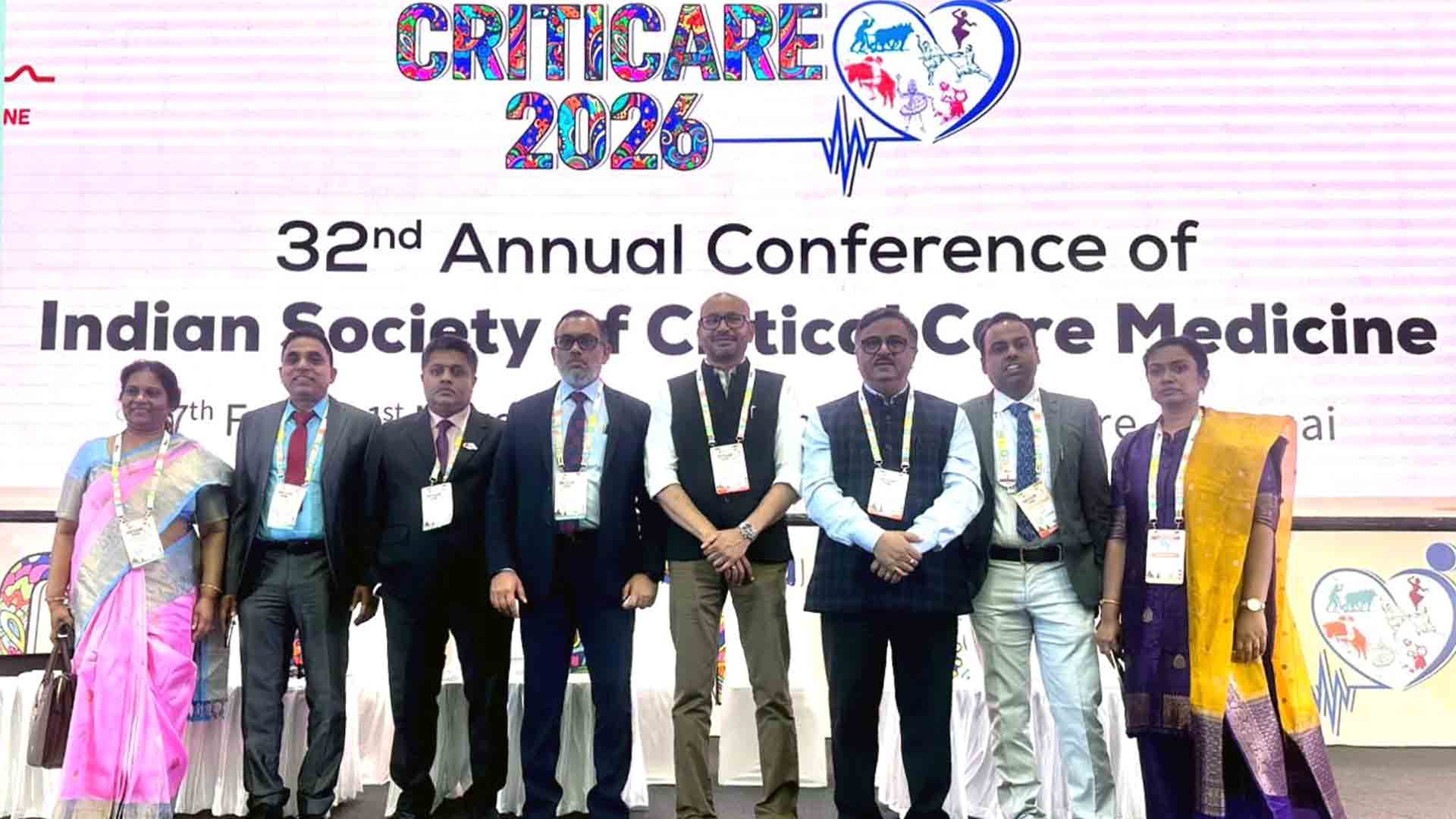
ISCCM Calls for Stronger ICU Infection Control and AMR Stewardship at Criticare 2026
Chennai: Warning that Antimicrobial Resistance (AMR) is emerging as a major threat to critical care, the Indian Society of Critical Care Medicine (ISCCM) has called for stronger antimicrobial stewardship, improved infection control practices, and nationwide awareness to combat rising ICU infections.
Speaking at Criticare 2026, held from February 27 to March 1 with over 15,000 registrations and 300 national and international faculty, senior intensivists highlighted concerns over the shrinking pool of effective antibiotics and the growing misuse of broad-spectrum drugs.
Dr. Sachin Gupta, General Secretary, ISCCM, stressed the need for careful evaluation before initiating antibiotics in ICU patients, cautioning against the routine assumption that every fever is infection-related. He emphasized targeted therapy with defined duration to prevent resistance.
Prof. Pradip Kumar Bhattacharya, Immediate Past President, ISCCM, noted that many patients referred from smaller hospitals already carry resistant infections, underlining the need for stronger infection control standards across all healthcare levels.
Dr. Ranvir Singh Tyagi, President-Elect, ISCCM, called for a three-pronged approach — public awareness, doctor training, and stronger diagnostic systems — to effectively curb AMR in India.
Dr. Kalavathy Swarna, Secretary, ISCCM Chennai Branch, highlighted the urgency of strict infection prevention practices in hospitals and at the community level.
ISCCM President Dr. Srinivas Samavedam also pointed to the growing role of data science and artificial intelligence in personalizing therapy and strengthening critical care outcomes.
Experts concluded that without coordinated action, AMR could significantly undermine life-saving treatments in ICUs in the coming years.