
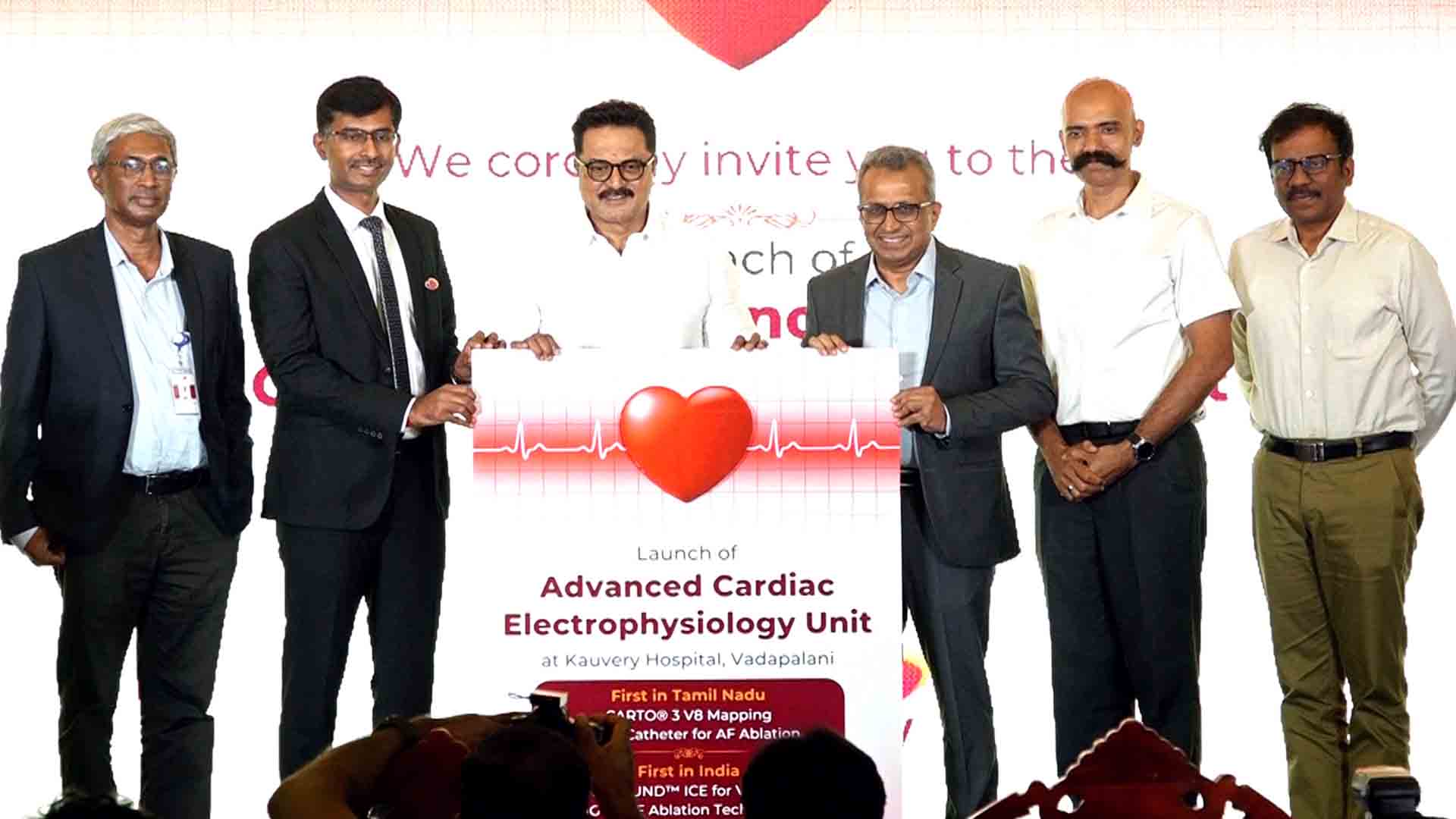
Kauvery Hospital, Vadapalani First in Tamil Nadu to Introduce Advanced 3D Technology for Complex Arrhythmia Treatment
Chennai: Kauvery Hospital, Vadapalani, has become the first hospital in Tamil Nadu to introduce advanced electroanatomical mapping technology for the treatment of complex heart rhythm disorders (arrhythmias), including atrial fibrillation and life-threatening ventricular tachycardia.
The state-of-the-art system was launched in the presence of actor R. Sarathkumar, along with Dr. Aravindan Selvaraj, Co-Founder and Executive Director of Kauvery Group of Hospitals, and Dr. Deep Chandh Raja, Senior Consultant and Director of Cardiac Electrophysiology at Kauvery Hospital, Vadapalani.
The newly introduced CARTO™ 3 system enables doctors to create highly detailed 3D maps of the heart’s electrical activity, allowing precise identification and treatment of abnormal rhythm sources. The hospital has also launched CARTOSOUND® technology, which provides real-time imaging of the heart during procedures, enhancing procedural accuracy and safety.
In addition, Kauvery Hospital has introduced the QDOT® catheter, which delivers high-power, short-duration energy for faster and more controlled treatment of atrial fibrillation, and the nGEN® radiofrequency system, designed to safely ablate the heart tissue responsible for irregular electrical signals.
Speaking at the launch, actor R. Sarathkumar said that Kauvery Hospital’s initiative marks a significant step forward in heart care. He emphasized the importance of maintaining heart health through proper diet, regular exercise, disciplined routines, and stress management.
Dr. Aravindan Selvaraj said the introduction of these globally established technologies would significantly improve safety and success rates, particularly in complex cases. He added that the initiative places Chennai on the global map for advanced arrhythmia care while ensuring patients in Tamil Nadu can access world-class treatment closer to home.
Explaining the clinical impact, Dr. Deep Chandh Raja said arrhythmias occur due to abnormal electrical circuits in the heart, often causing symptoms such as palpitations, dizziness, breathlessness, or fainting. While many rhythm disorders can be treated with conventional radiofrequency ablation, complex conditions like atrial fibrillation and ventricular tachycardia require advanced technology and specialized expertise. He noted that the new systems make some of the most sophisticated arrhythmia treatments available in Tamil Nadu—and in certain cases, in India—for the first time.