Power-Free Automation Can Cut Factory Cycle Time by Over 50%: Great Lakes–MMA White Paper
Chennai: A new white paper by Great Lakes Institute of Management, Chennai, in collaboration with the Madras Management Association (MMA), highlights how power-free mechanical automation can deliver significant productivity gains in Indian manufacturing without heavy capital expenditure.
The study, titled Foundations of Organisational Efficiency: Karakuri Kaizen and the Logic of Low-Cost Innovation, is based on primary, shop-floor research conducted with Toyoda Gosei South India Pvt. Ltd. It examines the application of Karakuri Kaizen, a gravity-driven automation approach from the Toyota Production System, and its impact on cycle time, ergonomics, cost efficiency, and sustainability.
Drawing on direct observation and before-and-after performance data from live operations, the white paper documents how simple mechanical systems—using gravity, rollers, pulleys, levers, and counterweights—can replace manual handling and, in certain cases, powered automation.
According to the findings, Karakuri-based solutions reduced cycle times by more than 50 per cent in specific lifting and material-handling operations, cutting process durations from approximately eight minutes to three or four minutes. The systems operated with zero electricity consumption, while also improving throughput, material flow, and shop-floor safety.
The study further notes significant ergonomic benefits, with reduced physical strain on workers by eliminating repetitive lifting, bending, and excessive motion. Scrap reuse levels of up to 90 per cent were also reported, contributing to waste reduction and space optimisation on the shop floor.
Led by Great Lakes faculty through extensive engagement with Toyoda’s operations and workforce, the research translates tacit shop-floor practices into structured, replicable insights for Indian manufacturers. The paper argues that many operational inefficiencies are design-led challenges rather than technology gaps, making low-cost mechanical innovation a practical first step before investing in digital or robotic automation.
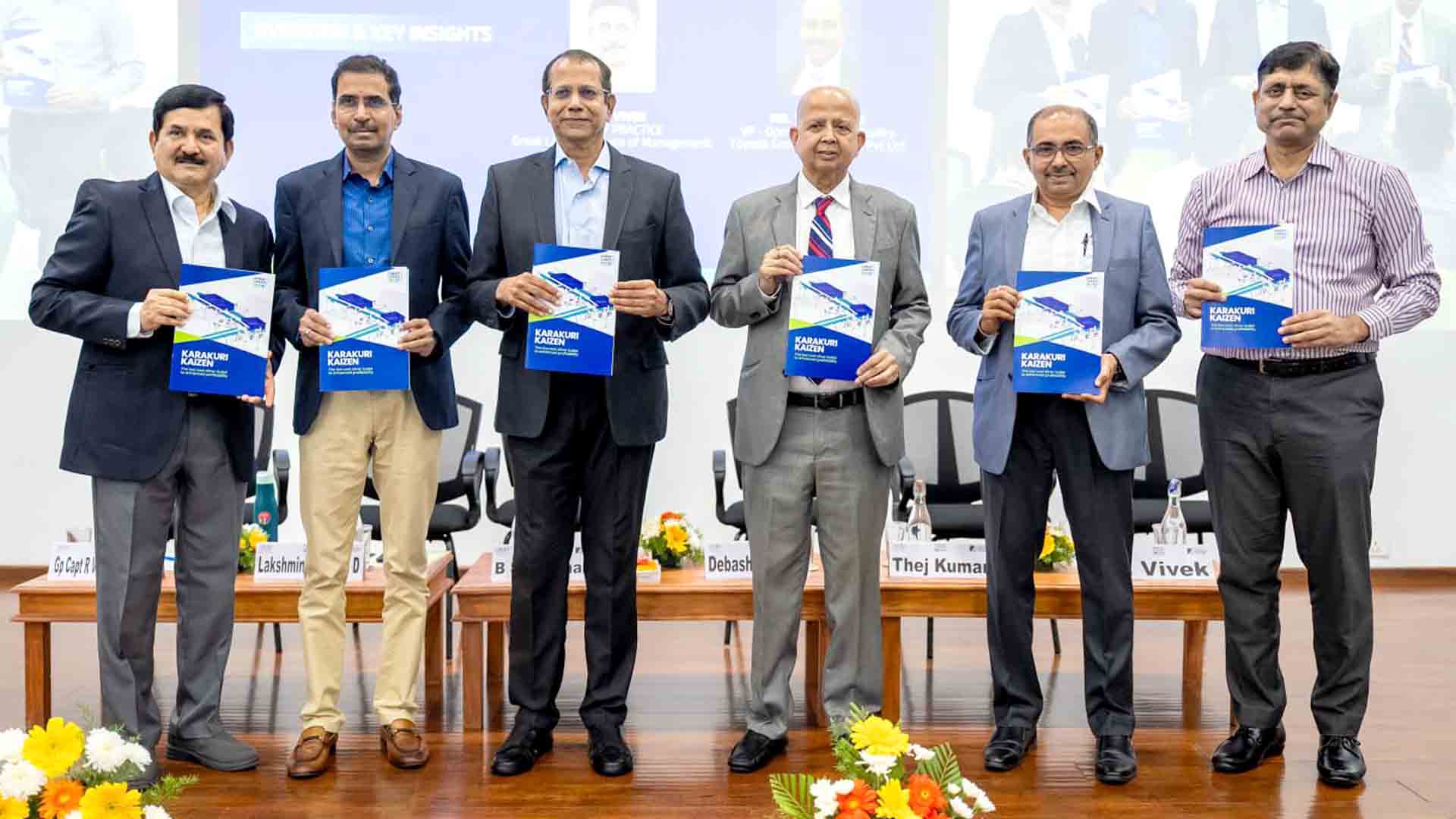
The white paper was launched in Chennai in the presence of industry leaders and concluded with a panel discussion on the future of frugal automation in Indian manufacturing, exploring how Karakuri Kaizen can complement advanced automation strategies by strengthening flow, ergonomics, and problem-solving capability at the shop-floor level.