Rare Pediatric Spine Surgery at Meenakshi Hospital Restores Movement in Paralysed Child
Thanjavur: The neurosurgery team at Meenakshi Hospital, Thanjavur, has successfully performed a highly complex neck spine surgery on a four-year-old child suffering from paralysis of all four limbs caused by severe upper cervical spinal cord compression.
Three months after the surgery, the child is showing significant neurological recovery and has begun walking with assistance, doctors said.
The child was admitted in a quadriplegic condition following a minor fall that resulted in Atlanto Axial Dislocation (AAD), a rare and dangerous misalignment of the upper neck bones. Further evaluation revealed that the child was also affected by an extremely rare genetic skeletal disorder—spondyloepiphyseal dysplasia congenita, which impacts bone strength and overall physical growth.
Given the complexity of pediatric spinal surgery and the added risks associated with the congenital disorder, the medical team undertook a detailed assessment using advanced CT and MRI imaging. The surgery, known as Occipito Cervical Transfacetal Screw Fixation, was performed to stabilise the skull and upper cervical spine and relieve pressure on the spinal cord.
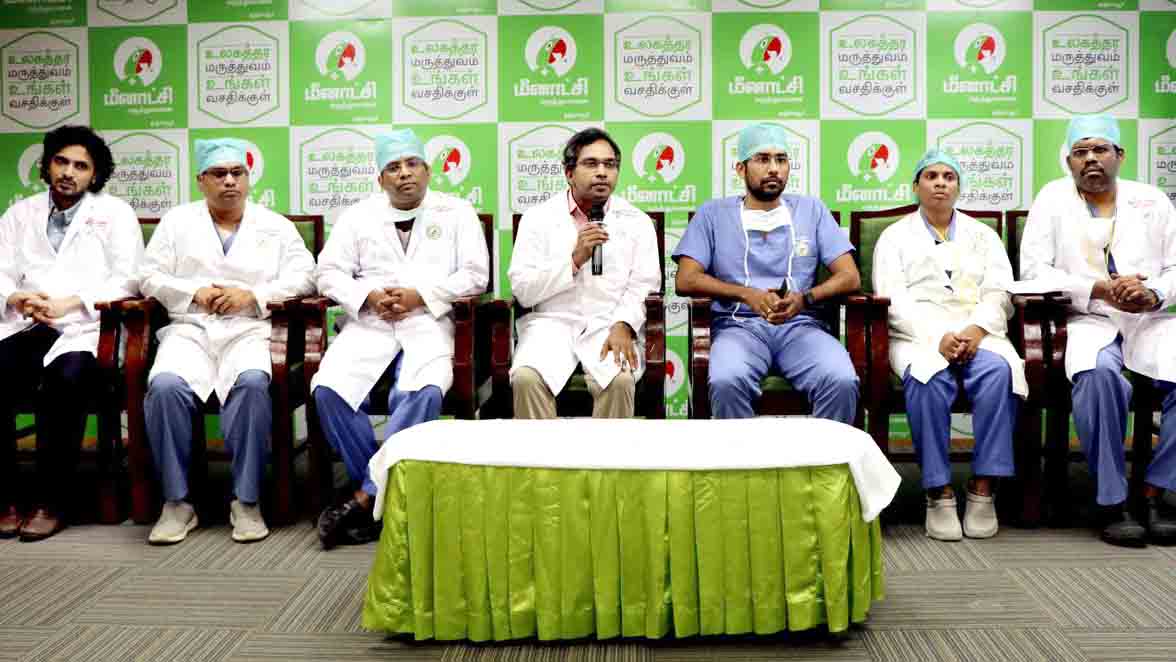
The procedure was carried out by neurosurgeons Dr. Arun Kumar and Dr. Kaveeze, with anaesthesia support from Dr. Arimanikam and Dr. Vinodha Devi. Post-operative critical care was managed by Dr. Shobana Devi and Dr. Siva Kumar, while Dr. Abdul Rahman, Pediatrician, played a key role in the child’s recovery.
Speaking to the media, Dr. Arun Kumar, Head of the Department of Neurosurgery, said the child was brought to the hospital with complete loss of movement in all four limbs. “Spinal surgery in children is challenging, and it becomes even more complex in patients with rare genetic bone disorders. With a coordinated multispecialty approach, advanced neuroimaging and intraoperative nerve monitoring, we were able to safely perform the surgery and restore neurological function,” he said.
Doctors explained that spondyloepiphyseal dysplasia congenita is an exceptionally rare condition, occurring in approximately one in 100,000 live births, and significantly increases surgical risk due to weakened bones. Intraoperative neuro-monitoring was used throughout the procedure to ensure the safety of the spinal cord and nerves.
Dr. V. Praveen, Deputy Medical Superintendent, Meenakshi Hospital, was also present during the press interaction.