ECMO Support Helps Save 69-Year-Old Heart Attack Patient During Emergency Angioplasty in Chennai
Chennai: Doctors at MGM Healthcare successfully treated a 69-year-old man who suffered cardiac arrest and cardiogenic shock during an emergency angioplasty procedure by rapidly deploying Extracorporeal Membrane Oxygenation (ECMO), an advanced artificial heart and lung support system.
The patient was admitted with ST-Elevation Myocardial Infarction (STEMI), a severe form of heart attack. Medical evaluation revealed critical blockages in the left main coronary artery and other major heart vessels. His condition was further complicated by cardiogenic shock, a life-threatening condition in which the heart is unable to pump sufficient blood to meet the body’s needs.
During the emergency angioplasty procedure, the patient developed a serious heart rhythm disturbance that led to cardiac arrest and severe circulatory collapse. Although doctors successfully restored his heartbeat through immediate cardiopulmonary resuscitation (CPR), he remained in a critically unstable condition.
To stabilise him, the medical team initially used an intra-aortic balloon pump (IABP), a device that assists heart function by improving blood flow and reducing the workload on the heart. As the patient’s condition remained critical, doctors escalated treatment to ECMO.
ECMO is an advanced life-support system that circulates blood through an external machine, where it is oxygenated before being returned to the body. The technology temporarily performs much of the work of the heart and lungs, ensuring continued blood circulation and oxygen delivery to vital organs during severe cardiac failure.
After stabilising the patient’s circulation, the team led by Dr. Babu Ezhumalai successfully restored blood flow through the blocked coronary arteries using complex angioplasty and stent implantation.
The patient required prolonged intensive care and multidisciplinary treatment before gradually recovering. He was subsequently weaned off ECMO, regained mobility and was discharged in stable condition.
According to follow-up assessments, the patient’s heart function improved significantly. His ejection fraction, a key measure of the heart’s pumping ability, recovered to 53%, allowing him to resume normal daily activities.
Growing Role of Mechanical Circulatory Support
Commenting on the case, Dr. Babu Ezhumalai said that advanced Mechanical Circulatory Support (MCS) technologies are increasingly being used in complex and high-risk coronary interventions.
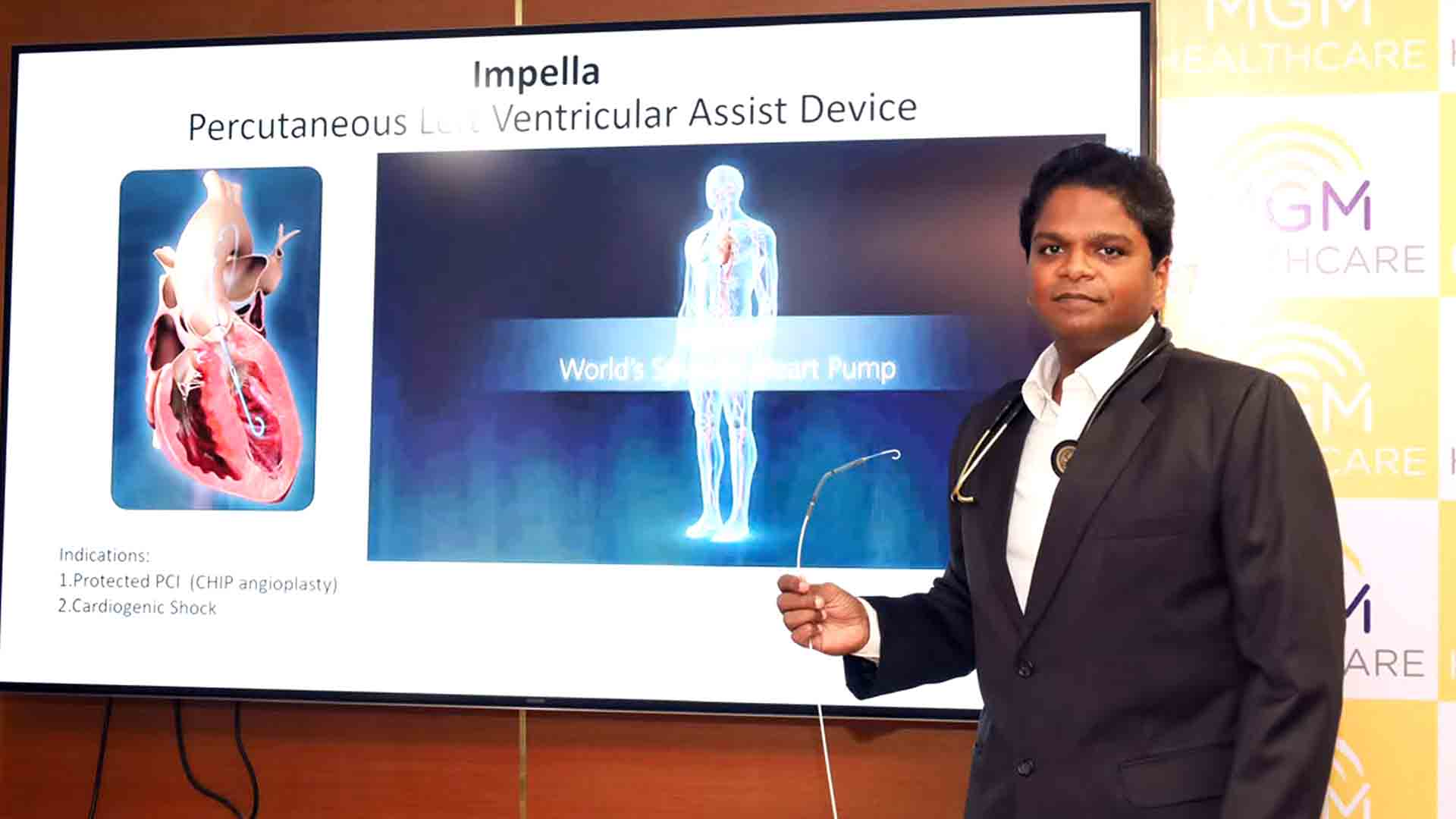
He noted that devices such as ECMO and Impella are helping doctors perform life-saving procedures in patients with severe coronary artery disease, cardiogenic shock and poor heart function who were previously considered too high-risk for intervention.
According to Dr. Ezhumalai, these technologies not only improve survival rates but also support recovery by maintaining circulation during critical periods, allowing damaged heart muscle to recover and improving long-term cardiac function.