Extremely Premature Babies Overcome Critical Complications at Chennai Hospital
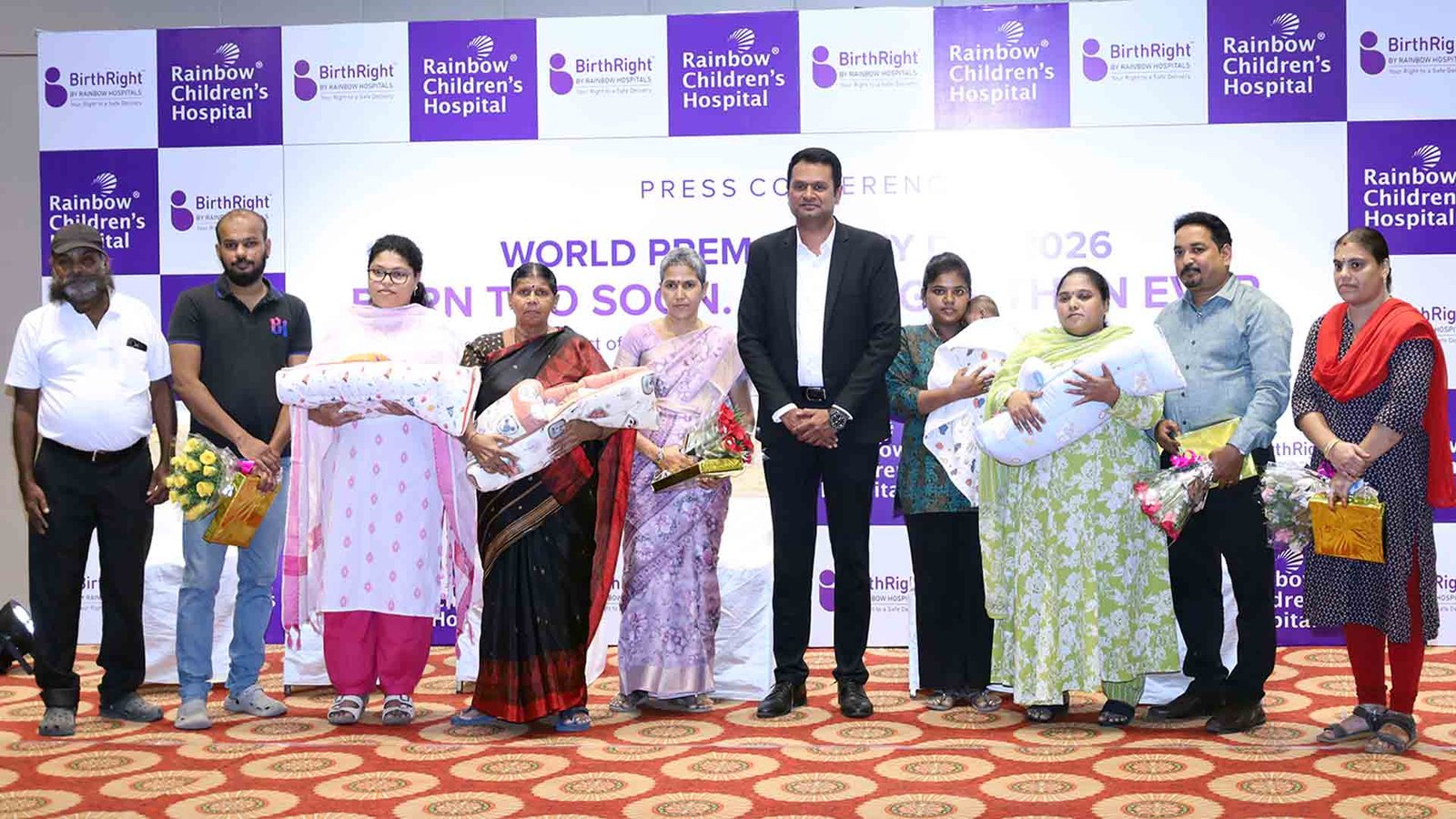
Chennai: Rainbow Children’s Hospital, Chennai, brought together families of extremely premature babies who overcame life-threatening complications during a press conference marking World Prematurity Week. The event highlighted advances in neonatal care and the challenges involved in managing births at 24–25 weeks of gestation, considered the limits of viability in India.
One of the cases involved a baby girl born at 24 weeks and three days, weighing 712 grams. She required 12 minutes of CPR after birth and later developed severe respiratory complications, pulmonary haemorrhage, bleeding on both sides of the brain and a drug-resistant bloodstream infection. She also underwent laser treatment in both eyes for retinopathy of prematurity. After 105 days of intensive NICU care and oxygen support, she was discharged weighing 1.944 kg.
Another case involved twins born at 24 weeks and two days, with a reported birth weight of 600 grams. Both faced respiratory complications and were diagnosed with patent ductus arteriosus (PDA), a condition in which a blood vessel near the heart remains open after birth. After two courses of medication failed, the condition was treated through surgical closure using clips when the babies were four weeks old. They recovered after nearly 75 days in hospital and are now ready for discharge.
The hospital reported survival rates of 68% among babies born at 24 weeks and 86% among those born at 25 weeks, stating that these outcomes are comparable to those reported in high-income countries.
According to estimates published in The Lancet, India recorded approximately 3.02 million preterm births in 2020, accounting for 13% of all births in the country and more than 20% of preterm births worldwide.
Dr. Giridhar S, Clinical Lead – Neonatology at Rainbow Children’s Hospital, Guindy, said extremely premature babies require specialized equipment, continuous monitoring, evidence-based protocols and coordinated care from neonatologists, nurses, surgeons, cardiologists and radiologists. He noted that a periviable birth does not necessarily result in an unfavourable outcome when appropriate medical support is available.
Dr. Shobana Rajendran, Senior Consultant – Neonatologist at the hospital’s Anna Nagar unit, highlighted common complications such as respiratory distress, brain haemorrhage, infections, feeding difficulties and retinopathy of prematurity. She said advances in ventilation, surfactant therapy, continuous monitoring and laser treatment have improved the management of these conditions.
Dr. Monisha R, Consultant – Neonatologist at the Sholinganallur unit, stressed the importance of antenatal care and early identification of risks. Multiple pregnancies, maternal hypertension, diabetes, infections, cervical insufficiency and placental complications can contribute to premature births. Regular check-ups and specialist supervision are important, particularly in high-risk pregnancies.
The hospital also highlighted the need for coordinated care covering antenatal counselling, delivery planning, NICU treatment, nutritional support and long-term developmental monitoring for extremely premature babies.