Apollo Cancer Foundation Reinforces Thalassemia Care Commitment, Celebrates Young Survivors
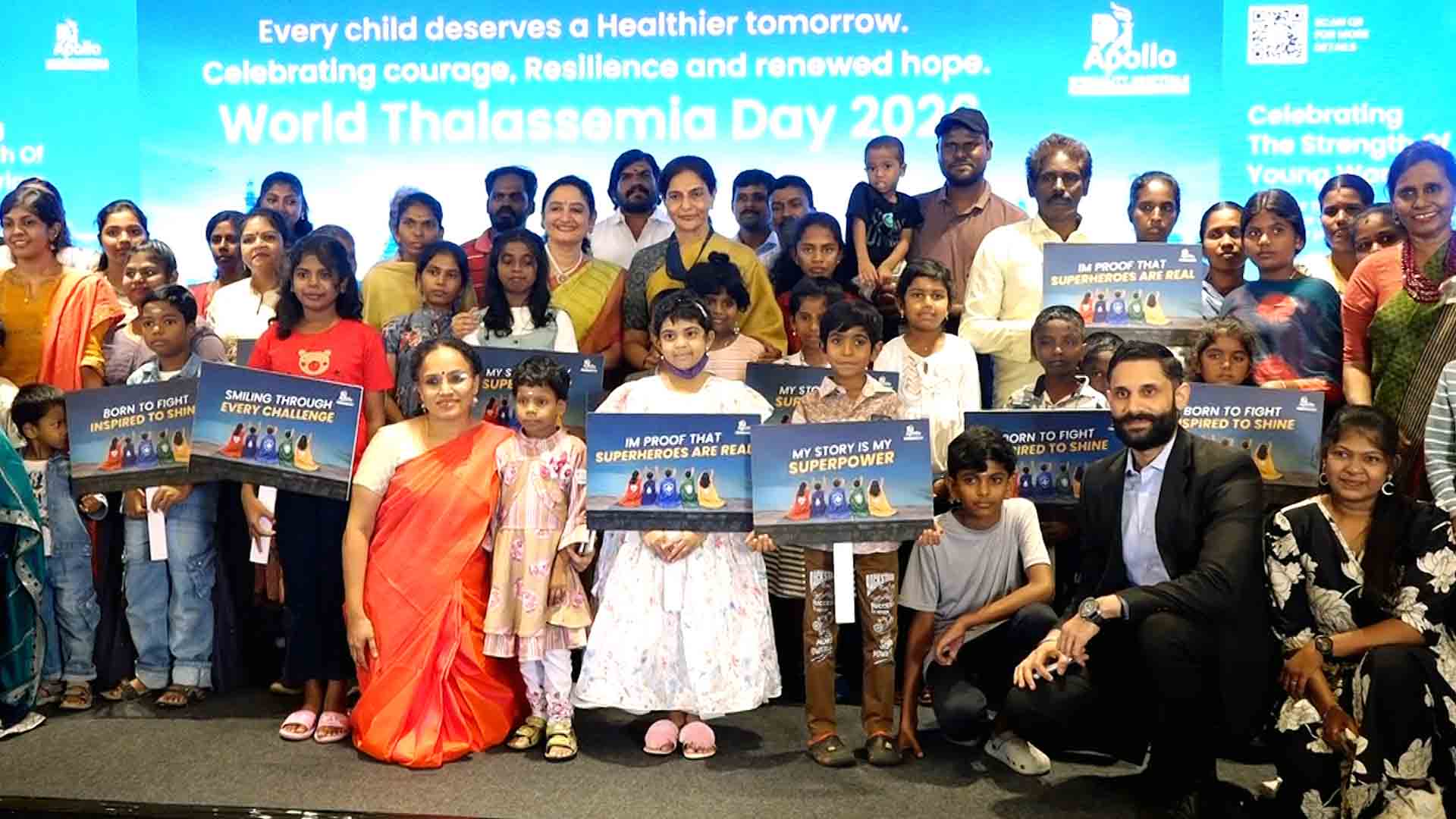
Chennai: Apollo Cancer Foundation, in collaboration with Apollo Speciality Hospitals, Teynampet, marked World Thalassemia Day 2026 by celebrating the journeys of 30 young survivors while reaffirming its commitment to strengthening awareness, early diagnosis and access to advanced treatment for children affected by thalassemia.
India continues to bear one of the highest burdens of Thalassemia globally, with an estimated 1–1.5 lakh children living with the condition and nearly 10,000–15,000 affected babies born each year. The disorder, a hereditary blood condition that impairs the body’s ability to produce healthy hemoglobin, often leads to severe anemia and lifelong dependence on blood transfusions if untreated.
Medical experts also estimate that nearly 42 million Indians are carriers of beta-thalassemia, underscoring the urgent need for increased awareness, carrier screening and timely intervention.
Recognising the long-term physical, emotional and financial impact on families, Apollo has been expanding its paediatric haematology and thalassemia care programmes. This includes advanced Bone Marrow Transplant (BMT) services, early diagnosis support, and long-term patient care initiatives across Tamil Nadu and other parts of the country.
As part of its efforts to improve access to treatment, the foundation is working with Coal India Limited under the Thalassemia Bal Sewa Yojana (TBSY). Launched in 2017 and currently in Phase IV, the initiative supports children from economically weaker sections diagnosed with Thalassemia Major and Severe Aplastic Anaemia through a nationwide treatment programme.
Bone Marrow Transplantation remains the only established curative option for many children with thalassemia major. Through Apollo’s specialised infrastructure, patients undergo donor matching, clinical evaluation and structured treatment protocols aimed at improving outcomes and access to timely care.
Apollo Hospitals has completed over 500 bone marrow transplants for thalassemia, reporting a 93% thalassemia-free survival rate. The programme has also adopted advanced approaches such as haplo-identical transplants, enabling treatment for children without fully matched donors.
Dr. Preetha Reddy, Vice Chairperson of Apollo Hospitals Enterprise Limited, highlighted the need for collaborative action to address the condition. She noted that early screening, timely diagnosis and access to advanced treatment can significantly improve outcomes, while partnerships between healthcare providers, government bodies and corporates are essential to expanding access to life-saving care.
Dr. Revathi Raj, Senior Consultant – Paediatrics and Haematology Oncology, said thalassemia affects not just patients but entire families, and emphasised that timely diagnosis and access to transplant care can help children lead healthier, disease-free lives.
Dr. Ramya U added that many children still depend on regular transfusions due to delayed diagnosis and limited awareness, stressing the importance of initiatives that promote early intervention and advanced care access.
Karan Puri, Chief Executive Officer of Apollo Speciality Hospitals, Teynampet, noted that Tamil Nadu has seen gradual improvement in thalassemia diagnosis and management in recent years, driven by better awareness, early screening and access to specialised care.
The event also featured interactions with survivors and their families, highlighting stories of resilience and recovery. Organisers said such initiatives play a key role in strengthening collaboration between healthcare institutions, corporate partners and government programmes to improve treatment accessibility and reduce the burden of thalassemia in India.