Kumaran Hospitals Performs 20-Hour Surgery to Remove Rare Mesenteric Tumour in Chennai
Chennai: A 29-year-old IT professional underwent a 20-hour surgery at Kumaran Hospitals, Kilpauk, for the removal of a rare, high-grade malignant retroperitoneal tumour measuring 20 × 20 × 18 cm that had developed in the mesentery, the tissue that supports and connects the intestines within the abdomen.
The patient was discharged 10 days after the procedure and is expected to resume normal activities soon.
According to the hospital, the patient had Neurofibromatosis Type 1 (NF1), a hereditary genetic condition associated with an increased risk of developing certain tumours.
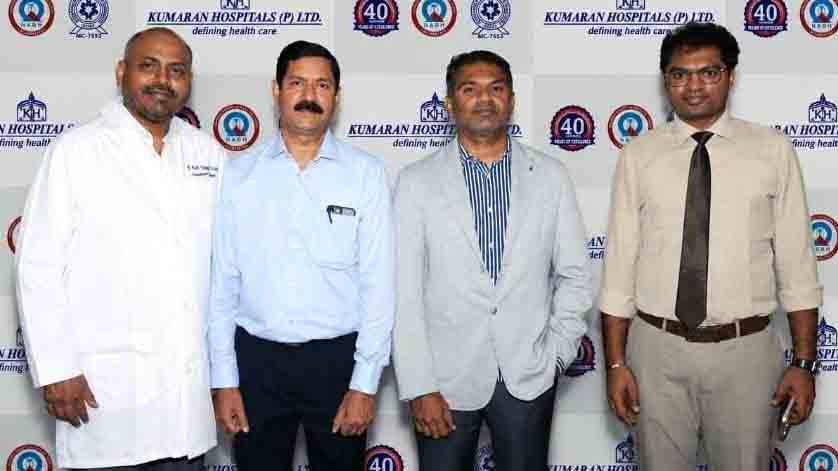
The surgery was performed by Prof. Rela’s team and Dr. P. Kapil Nagaraj, Gastrointestinal Surgeon. The procedure involved support from a multidisciplinary team that included an anaesthetist, a liver transplant specialist with vascular expertise, an intensivist, an infectious disease specialist, a radiologist and intensive care nurses.
Advanced surgical technologies and monitoring systems were used during the procedure to support tissue dissection, vessel sealing and continuous monitoring of the patient throughout the prolonged surgery.
Dr. Kapil Nagaraj said the patient had initially presented with significant fatigue, poor oral intake and weight loss. CT imaging identified the 20 × 20 × 18 cm mesenteric tumour.
He said the primary surgical challenge was the tumour’s location at the root of the mesentery, a central region of the abdomen containing major blood vessels supplying abdominal organs. The tumour was closely associated with these vessels, making the surgical dissection particularly complex and requiring careful handling throughout the 20-hour procedure.
Dr. S.P. Shivakumar, Managing Director, Kumaran Hospitals, Kilpauk, said the case required coordinated management by a multidisciplinary medical team, with extensive preparation for the complexities involved in the procedure.
He also highlighted the role of surgical expertise, technology and infrastructure in managing complex cases and said the hospital continues to adopt advances in surgery, including robotic surgery.
Dr. Shivakumar further said unexplained weight loss should not be ignored, as it can sometimes indicate an underlying illness. He noted that genetic factors can predispose some individuals to certain malignancies and that early diagnosis can be important in managing such conditions.
The case highlights the challenges involved in treating large abdominal tumours located close to major blood vessels, particularly in patients with an underlying genetic predisposition such as NF1.