31-Year-Old with End-Stage Heart Failure Undergoes Successful Heart Transplant at SIMS Hospital
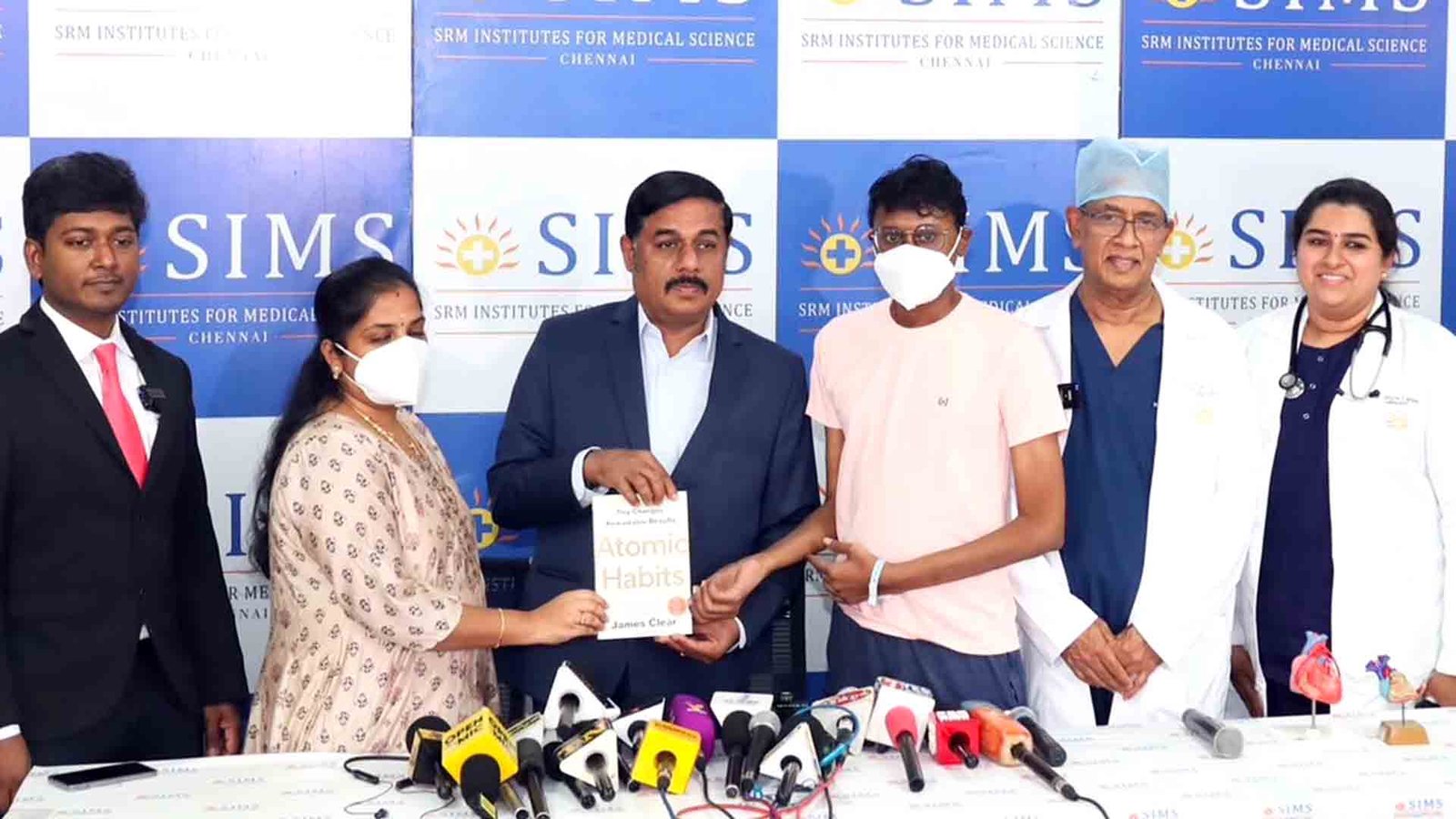
Chennai: A 31-year-old man from Puducherry with end-stage heart failure caused by inherited dilated cardiomyopathy (DCM) has undergone a successful heart transplantation at SIMS Hospital in Chennai.
The donor heart came from a 23-year-old brain-dead donor and was transported to the hospital within 20 minutes through the state’s organ-sharing network.
The patient had been experiencing severe breathing difficulties since February. He sought medical attention after his condition worsened to the point that he could no longer lie flat on his back and his breathing difficulties began affecting his daily activities.
An echocardiogram showed severe left ventricular dysfunction with heart failure, while a subsequent cardiac MRI confirmed dilated cardiomyopathy with heart failure. DCM causes the heart muscle, particularly the left ventricle, to become enlarged and weakened, reducing its ability to pump blood effectively.
In this case, the condition was inherited from the patient’s father, who is also undergoing treatment for the disease. During his hospitalisation, the patient suffered a cardiac arrest but was successfully resuscitated and stabilised.
Heart transplant performed in four hours
Following evaluation, the medical team determined that heart transplantation was the most appropriate treatment option and listed the patient for transplantation. A suitable donor heart was identified based on factors including blood group, body weight, age, crossmatch results and immune compatibility.
The transplant team travelled to the donor hospital early in the morning and transported the heart to SIMS Hospital within 20 minutes. At the same time, another surgical team began removing the patient’s diseased heart and placed him on cardiopulmonary bypass, which temporarily supported the functions of the heart and lungs.
The transplant procedure was completed in approximately four hours. The patient was subsequently monitored in intensive care for seven days.
The transplant team was led by Dr. Bashi, Chief Cardiac Surgeon and Director, ICAD, and included Dr. Rajeev Thilak Chellasamy, Heart Transplant Surgeon; Dr. Mohammed Ibrahim, Cardiac Surgeon; Dr. Shilpa Menon, Heart Failure Cardiologist; Dr. Aju Jacob, Chief Cardiac Anaesthetist; Dr. Arunkumar, Cardiac Anaesthetist; and Dr. Kishore, Cardiac Anaesthetist.
Dr. Bashi said patients with end-stage heart failure may require heart transplantation when other treatment options have been exhausted. He highlighted the coordination required among surgeons, cardiologists, anaesthesiologists, transplant coordinators, nurses and critical care teams, along with the donor centre, for the timely transportation and transplantation of the organ.
Dr. Rajeev Thilak Chellasamy said the patient’s previous cardiac arrest required detailed planning throughout the transplant process. He added that the patient would require close monitoring for the next six months, when the risk of organ rejection is highest.
Dr. Shilpa Menon said advanced heart failure management involves more than transplantation, with treatment options determined through comprehensive evaluation. Depending on the patient, these may include optimised medical therapy, device-based treatment, mechanical circulatory support or heart transplantation.
She also emphasised the importance of a multidisciplinary approach in managing advanced heart failure.
Dr. Ravi Pachamuthu, Chairman, SRM Group, said the procedure highlighted the importance of specialised cardiac care and coordinated efforts among cardiac specialists, surgeons, anaesthetists, transplant coordinators, nurses and support teams.
Heart failure can significantly affect quality of life, particularly among younger adults, limiting their ability to work and carry out daily activities. Early diagnosis, appropriate medical management, lifestyle modifications and regular follow-up can help manage symptoms, slow disease progression and improve quality of life.