Rela Hospital Restores Shoulder Function in 97-Year-Old with India’s First Fully Awake Keyhole Surgery Using Biodegradable Balloon Implant
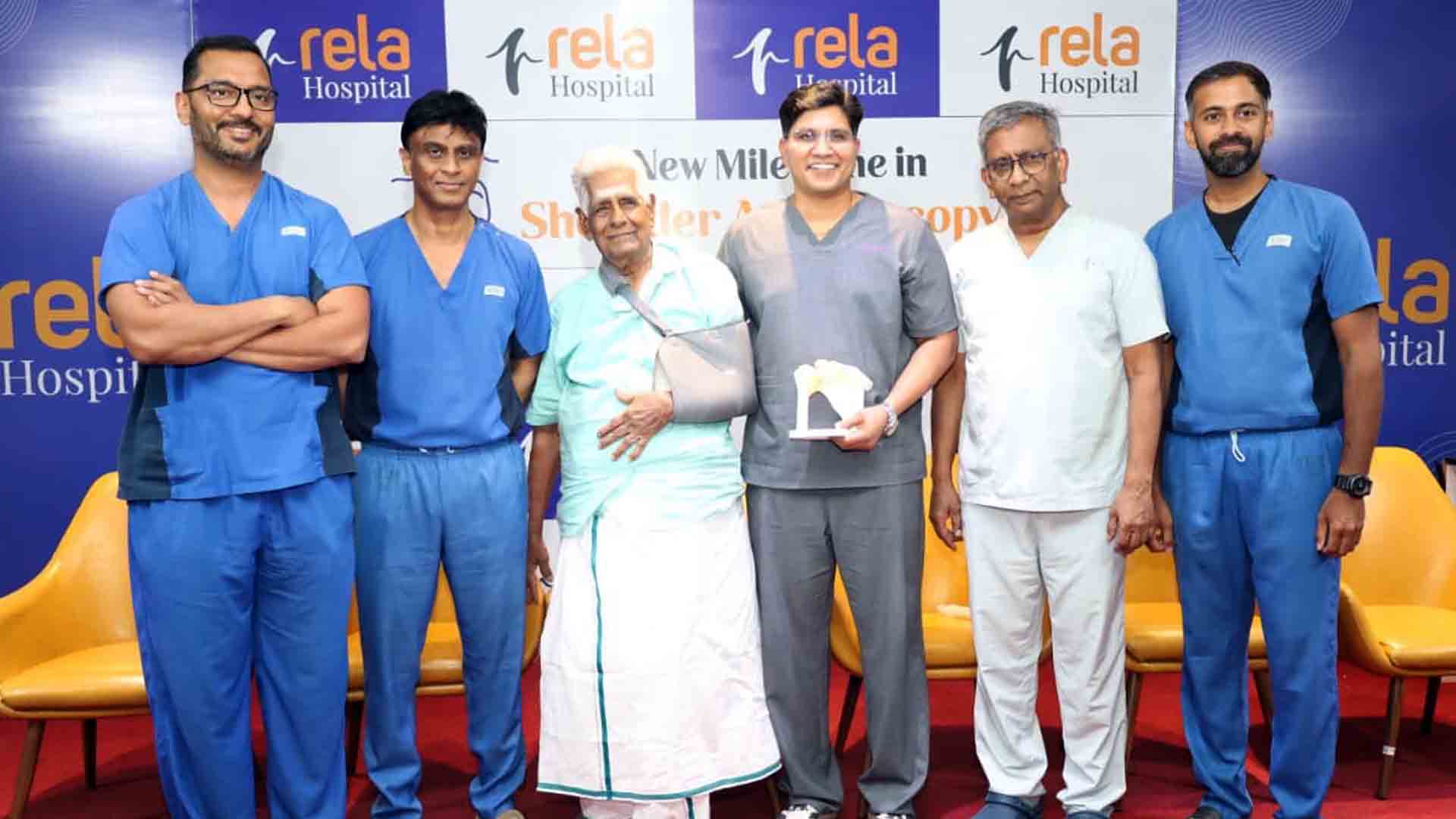
Chennai: A 97-year-old man has regained shoulder function and experienced significant pain relief after undergoing what Rela Hospital said is India’s first fully awake keyhole (arthroscopic) surgery using a fully biodegradable balloon spacer to treat a massive and irreparable rotator cuff tear.
The patient sustained the shoulder injury following a fall at home. Due to his advanced age and underlying cardiac condition, doctors opted against general anaesthesia and instead performed the procedure under an interscalene nerve block, allowing him to remain fully awake throughout the surgery.
According to the hospital, the minimally invasive approach enabled the patient to recover quickly. He was discharged two days after the procedure following routine post-operative care, arm support and physiotherapy sessions.
Understanding the Injury
The rotator cuff consists of four muscles and their tendons that surround the shoulder joint, helping stabilise the shoulder and enabling movements such as lifting and rotating the arm.
The patient suffered a tear in the rotator cuff of his left shoulder after the fall and experienced persistent pain for nearly a month. He was unable to lift or use his left arm, and conservative treatment did not improve his condition as the pain and weakness continued to worsen.
Biodegradable Balloon Spacer Used
The Arthroscopy and Sports Medicine team performed the procedure using the InSpace™ biodegradable subacromial balloon spacer, a dissolvable implant designed for patients with massive irreparable rotator cuff tears.
During the arthroscopic procedure, a small deflated balloon was inserted through tiny incisions into the space beneath the shoulder bone and inflated with sterile saline. The balloon acts as a cushion, helping maintain proper spacing within the shoulder joint and reducing painful bone-on-bone friction. This allows patients to regain shoulder movement while the balloon gradually dissolves over several months without leaving behind permanent implants, screws or anchors.
Why General Anaesthesia Was Avoided
Dr. Ashok S. Gavaskar, Clinical Lead, Orthopaedics and Head of Joint Replacement Services at Rela Hospital, said the patient’s tendon tear was extensive and unsuitable for conventional tendon repair because the damaged tissue had retracted significantly.
He said shoulder arthroscopy is generally performed under general anaesthesia, but the patient’s age and cardiac condition made that approach potentially risky. The surgical team therefore used an interscalene nerve block, which numbed the shoulder while allowing the patient to remain awake and comfortable throughout the procedure, reducing anaesthesia-related risks and supporting faster recovery.
Rotator Cuff Tears Common Among Older Adults
Dr. Prakash Ayyadurai, Consultant – Orthopaedics, Arthroscopy & Sports Medicine, who led the surgical team, said rotator cuff tears are among the most common shoulder disorders and become more prevalent with age.
According to him, Indian studies indicate that around one in five adults above the age of 40 has some degree of rotator cuff tear, while full-thickness tears occur in approximately 10–11% of this population.
He noted that ageing is the primary risk factor as tendons naturally weaken over time. Conditions such as diabetes, hypertension, smoking and years of repetitive overhead activities can further increase the risk, making even a minor fall capable of causing a major tear.
Importance of Early Medical Evaluation
Prof. Mohammed Rela, Chairman of Rela Hospital, said the case demonstrates how minimally invasive shoulder surgery combined with tailored anaesthetic techniques can make surgery possible even for patients in their 90s.
He noted that persistent shoulder pain and severe loss of arm function should not be accepted as an inevitable consequence of ageing, adding that early specialist evaluation can help determine appropriate treatment options and improve outcomes for elderly patients.