Rare Shoulder Reconstruction Restores Arm Movement in 52-Year-Old After Six-Month-Old Fracture-Dislocation
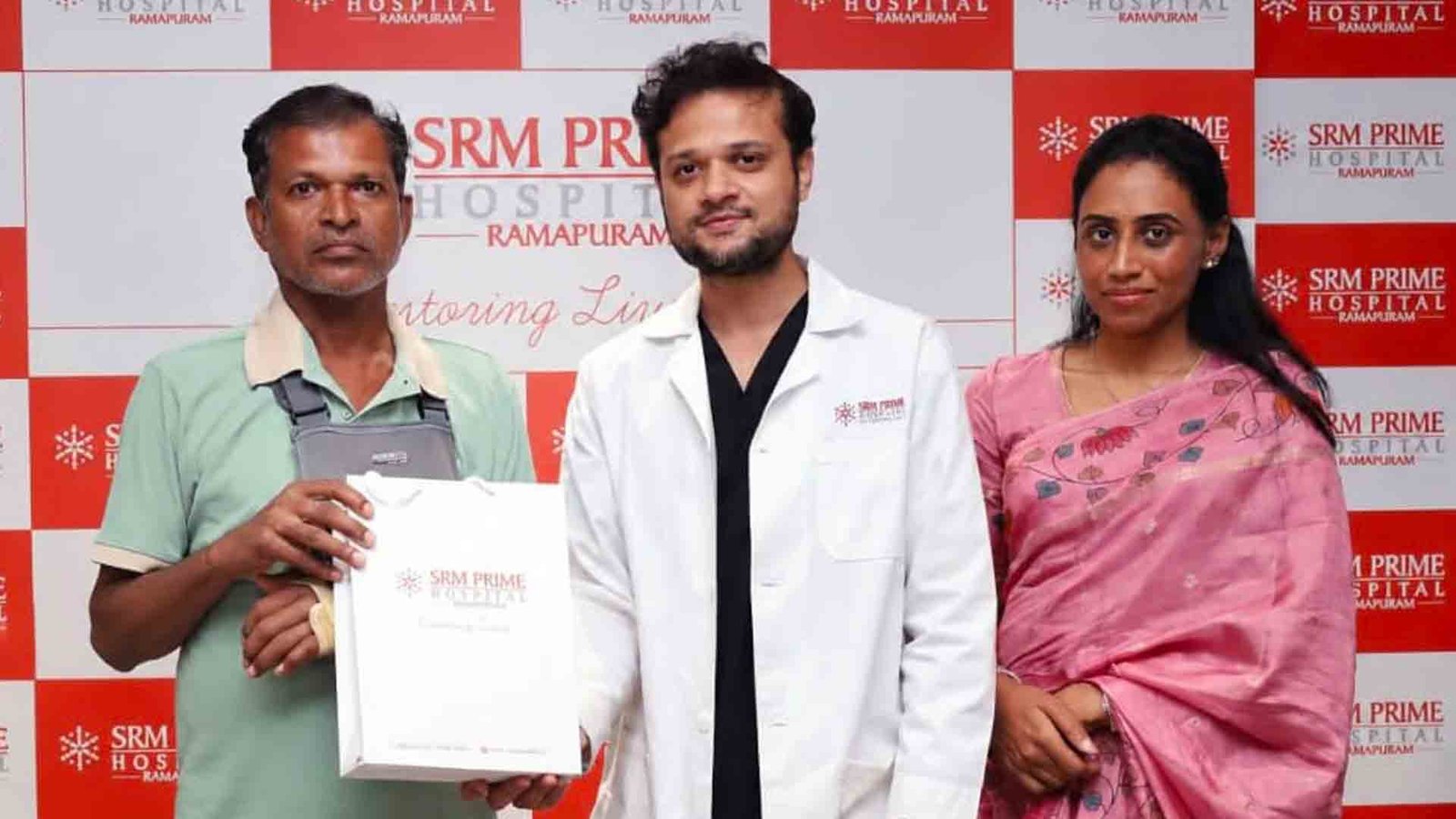
Chennai: A 52-year-old man from Jharkhand has regained movement in his left arm following an eight-hour complex shoulder reconstruction at SRM Prime Hospital, after an untreated fracture-dislocation had left his shoulder chronically dislocated for nearly six months.
The prolonged injury had resulted in extensive soft-tissue scarring, the formation of a pseudo-joint, and compression of the brachial plexus—the network of nerves responsible for movement and sensation in the shoulder, arm and hand.
According to the hospital, the displaced head of the humerus had moved significantly away from its normal position and become trapped within dense scar tissue. It was also located dangerously close to the axillary artery, the major blood vessel supplying the arm, making the reconstruction particularly challenging.
Complex shoulder reconstruction
The surgical team first restored the displaced humeral head to its anatomical position. The tightened joint capsule was released and surrounding scar tissue was removed to improve shoulder movement.
To improve the long-term stability of the joint, the orthopaedic team also performed a Latarjet procedure. The procedure involves transferring a small piece of bone from the coracoid to the front of the shoulder socket, providing additional support and reducing the risk of recurrent dislocation.
The prolonged dislocation had also caused scar tissue to compress the brachial plexus. To address this, the Plastic Surgery team performed brachial plexus neurolysis, a procedure that frees the nerves from surrounding scar tissue and adhesions.
An intraoperative electrodiagnostic study of the nerves was also performed during the surgery.
The procedure was carried out by a multidisciplinary team comprising Dr. Nikhil Jawaharlal Nahar, Consultant – Shoulder & Orthopaedic Surgeon; Dr. Lokesh Suryanarayanan, Consultant – Plastic Surgery; Dr. Subashini, Senior Consultant – Plastic Surgery; and Dr. K Partheeban, Clinical Lead & Senior Consultant – Anaesthesia.
The orthopaedics team undertook the shoulder reconstruction, including the Latarjet procedure, while the Plastic Surgery team performed the nerve decompression and worked to preserve brachial plexus function.
Recovery and rehabilitation
The patient was discharged five days after the surgery with significant pain relief and improvement in movement of the left upper arm. He is currently undergoing a structured rehabilitation programme under the guidance of the Physiotherapy and Rehabilitation team.
Dr. Nikhil Jawaharlal Nahar said the case was particularly challenging because the injury had remained untreated for nearly six months, resulting in chronic dislocation, extensive scar tissue and brachial plexus compression.
He said the proximity of the displaced humeral head to the axillary artery added to the surgical complexity. The team used advanced imaging, intraoperative nerve monitoring and multidisciplinary coordination to restore the shoulder while protecting the surrounding nerves and blood vessels.
“After an eight-hour surgery, the patient experienced significant pain relief and regained movement in his arm, giving him the opportunity to return to his normal life and livelihood,” Dr. Nahar said.
Siva, CEO, SRM Prime Hospital, said the case demonstrated the need for multidisciplinary management in complex orthopaedic conditions. He said the reconstruction required detailed planning and coordination between orthopaedics, plastic surgery, anaesthesia and rehabilitation teams to restore function while protecting critical nerves and blood vessels.
Early treatment recommended for shoulder injuries
The surgical team advised that shoulder fractures and dislocations should not be ignored, particularly when patients experience persistent pain, visible deformity, inability to move the arm, weakness or numbness following an injury.
Early medical evaluation and appropriate imaging after a significant shoulder injury can help identify complications and reduce the risk of chronic deformity, nerve or blood vessel compression and long-term loss of function.